

Ever heard of BRICS? No, it’s not a new dance move or a trendy coffee blend. It’s a powerhouse group of emerging economies that’s shaking up the global stage. Comprising Brazil, Russia, India, China, and South Africa, these nations are strutting their stuff with a collective economic growth that’s hard to ignore.
Understanding BRICS Nations
BRICS represents a coalition of five major emerging economies with significant influence on global affairs. This group works together to enhance collaboration across various sectors.
Definition of BRICS
BRICS stands for Brazil, Russia, India, China, and South Africa. This acronym emphasizes the collaboration among these countries, which collectively drive over 40% of the world’s population and substantial portions of global GDP. Established to promote cooperation, the alliance focuses on various issues like trade, investment, and sustainable development. Aiming for improved economic stability, BRICS nations coordinate policies to enhance mutual growth and influence.
Countries Involved in BRICS
The BRICS coalition consists of Brazil, Russia, India, China, and South Africa. Each member contributes unique strengths. Brazil offers vast natural resources and agricultural products, while Russia plays a vital role in energy supplies. India emphasizes a growing tech industry and a large workforce. China is a manufacturing powerhouse and significant global trader, with South Africa bringing diverse minerals and strategic access to African markets. Together, these nations represent a combined market of over three billion people, enhancing their global economic presence.
History of BRICS
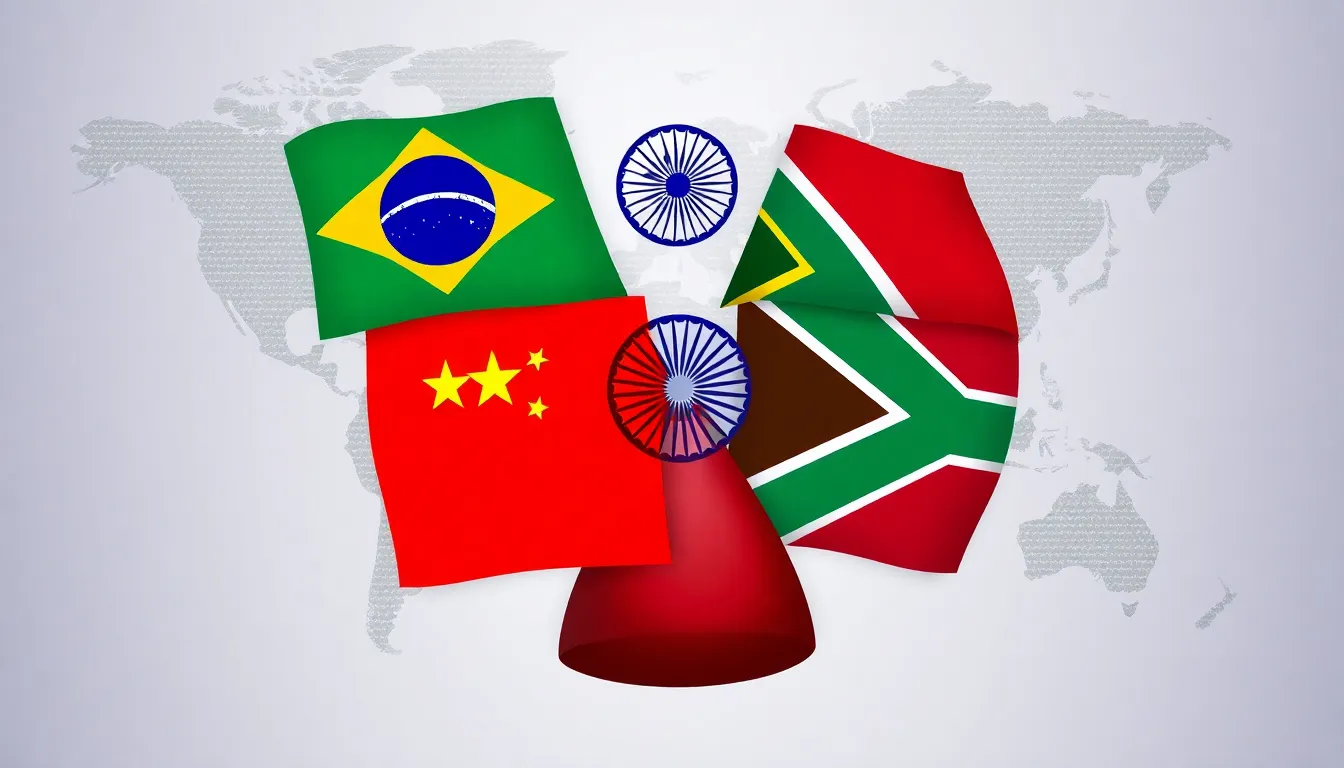
BRICS emerged in the early 2000s as a response to shifting global economic dynamics. The coalition reflects the growing influence of emerging economies.
Formation and Evolution
Initially, the concept of BRICS originated in 2001 under economist Jim O’Neill, who identified Brazil, Russia, India, and China as rapidly developing markets. These nations united to create a platform for cooperation, and in 2009, the first official BRIC summit took place in Russia. South Africa joined in 2010, expanding the group’s representation. Since then, BRICS has evolved into a vital alliance with a focus on shared economic interests and strategic collaboration. Regular summits and meetings foster dialogue, enhancing cooperation in diverse sectors.
Key Milestones
In 2011, BRICS established the New Development Bank to support infrastructure projects and promote sustainable investment. This landmark decision highlighted the commitment to addressing global economic challenges. The group launched the BRICS Contingent Reserve Arrangement in 2015, aimed at providing financial support during crises. Noteworthy initiatives also include cooperative efforts on trade, technology, and environmental sustainability. Each summit marks a significant step in bolstering cooperation and driving collective action against contemporary global issues.
Economic Significance of BRICS
BRICS nations play a vital role in the global economy, fostering collaboration and growth among emerging economies. Their collective actions significantly influence trade patterns and investment flows worldwide.
Trade Relations Among BRICS Nations
Trade relations among BRICS nations thrive on mutual benefit and diversification. Brazil exports agricultural products, while Russia supplies energy resources. India provides information technology services, and China dominates manufacturing exports. South Africa contributes minerals and agricultural goods. In 2022, the trade volume among BRICS countries reached approximately $500 billion, highlighting their interconnected markets. Cooperation in sectors like agriculture, energy, and technology facilitates trade agreements, reducing reliance on developed nations. Joint initiatives strengthen economic ties and encourage innovation across member states.
Investment Opportunities
Investment opportunities within BRICS offer substantial growth potential. Each nation presents unique advantages for investors, attracting diverse sectors. China leads in foreign direct investment, particularly in infrastructure and technology. India’s technology and service sectors draw substantial international capital. Energy projects in Russia attract investment for sustainability. Brazil’s agricultural investments appeal to global food security amid increasing demand. South Africa’s mineral wealth provides significant returns for resource extraction industries. In 2023, investments among BRICS countries surpassed $100 billion, underscoring their potential to reshape global investment landscapes. Collaborative funds, like the New Development Bank, further enhance investment avenues, supporting projects that benefit all member states.
Political Impact of BRICS
BRICS nations exert substantial influence on global political dynamics, enhancing their power through collaborative strategies.
Influence on Global Governance
BRICS shapes global governance by advocating for a multipolar world. This coalition promotes balanced representation within international organizations, aiming to reduce dominance by Western powers. Member countries participate in various forums, including the United Nations, where they push for reforms that reflect their interests. These nations collectively address issues such as climate change, sustainable development, and economic inequality, advocating for policies that prioritize the needs of emerging economies. For example, in recent years, they have united to reform the International Monetary Fund (IMF) and World Bank governance structures, ensuring decision-making includes diverse voices.
Collaborations and Agreements
Strategic collaborations among BRICS nations strengthen political clout on the global stage. The coalition emphasizes joint initiatives in security, economy, and technology, fostering agreements that benefit member states. Regular summits provide a platform for discussing mutual interests and coordinating policies. Initiatives, like the BRICS New Development Bank, facilitate cooperation on infrastructure projects and financing, addressing pressing development needs. Bilateral agreements among member countries enhance trade relations, promote energy security, and streamline investments. As a result, these collaborations create a unified front, enhancing the political significance of BRICS in shaping global agendas.
Challenges Facing BRICS
BRICS faces multiple challenges that can impact its cohesion and effectiveness.
Economic Disparities
Economic disparities among member nations create challenges for BRICS. Brazil and South Africa struggle with slower growth rates compared to China and India, which experience rapid economic expansion. Wealth inequality is pronounced within these nations, with significant portions of the population lacking access to basic services. Trade imbalances complicate relationships, as some countries rely heavily on exports to China, leading to dependency issues. These disparities affect coordinated economic policies, making it difficult for BRICS to present a united front in global negotiations.
Political Differences
Political differences among BRICS nations pose significant hurdles. Each country follows a distinct governance model, ranging from democratic to authoritarian regimes. Disagreements on international issues, such as climate policy and conflict resolution, can lead to internal friction. Furthermore, varying national interests shape how these countries engage in global forums. This divergence complicates collective decision-making and diminishes the group’s overall influence. Striving for consensus becomes challenging, further highlighting the complexities within the coalition.
Future of BRICS
The future of BRICS holds potential for substantial transformation in the global landscape, driven by collective ambitions and challenges.
Potential Expansion
Expansion remains a key discussion point among BRICS nations. Countries such as Argentina, Egypt, and Indonesia have expressed interest in joining the bloc, enhancing its influence. Each prospective member brings unique resources and market advantages. Integrating new members could boost collective GDP and trade volume, fostering deeper economic ties. Moreover, expansion could provide enhanced representation for emerging markets on the global stage. Potential changes to membership dynamics may create opportunities for collaboration across various sectors, including technology and energy.
Strategic Goals
Strategic goals shape BRICS’s collective vision for the future. Prioritizing sustainable development, the coalition aims to address economic disparities and promote inclusive growth. Enhancing trade relationships among member nations serves as a crucial objective, with targeted initiatives designed to facilitate investment flows. Fostering cooperation in technology and innovation is another key focus, providing a framework to share expertise and resources. Advocating for a multipolar world remains central, as BRICS works towards balanced power distribution in global governance. Establishing strong partnerships with other regional organizations will ultimately reinforce its influence on international issues.
BRICS nations are reshaping the global economic landscape through their collective strength and cooperation. By fostering collaboration in trade and investment, they’re not just enhancing their own economies but also influencing global governance. As they navigate challenges like economic disparities and political differences, their commitment to a multipolar world remains steadfast.
The potential expansion of BRICS could further amplify their impact, inviting new members to join their ranks. With a focus on sustainable development and innovation, BRICS is poised to play a crucial role in addressing global issues. This coalition stands as a testament to the power of collaboration among emerging economies, driving forward a vision of shared prosperity and stability.


