
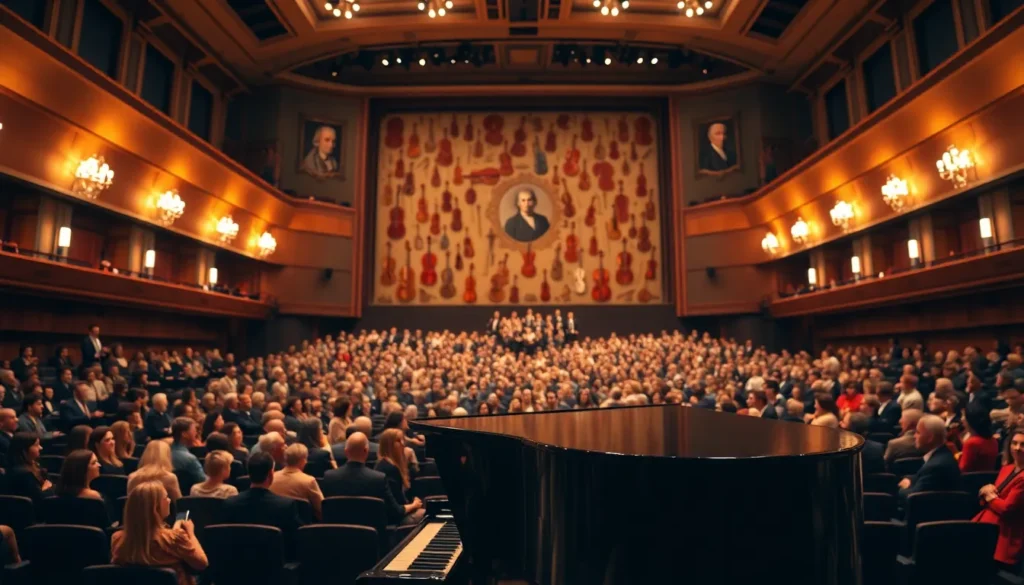
Classical music is like a fine wine, getting better with age, and a bit more complex. The journey through the different eras of classical music is nothing short of fascinating. From the intricate melodies of the Baroque era to the bold expressions of the 20th century, each period brought something unique to the table, or shall we say, the grand piano. Let’s jump into these musical transformations, where even the most laid-back of melodies can spark some serious toe-tapping.
The Baroque Era (1600-1750)
Key Characteristics of Baroque Music
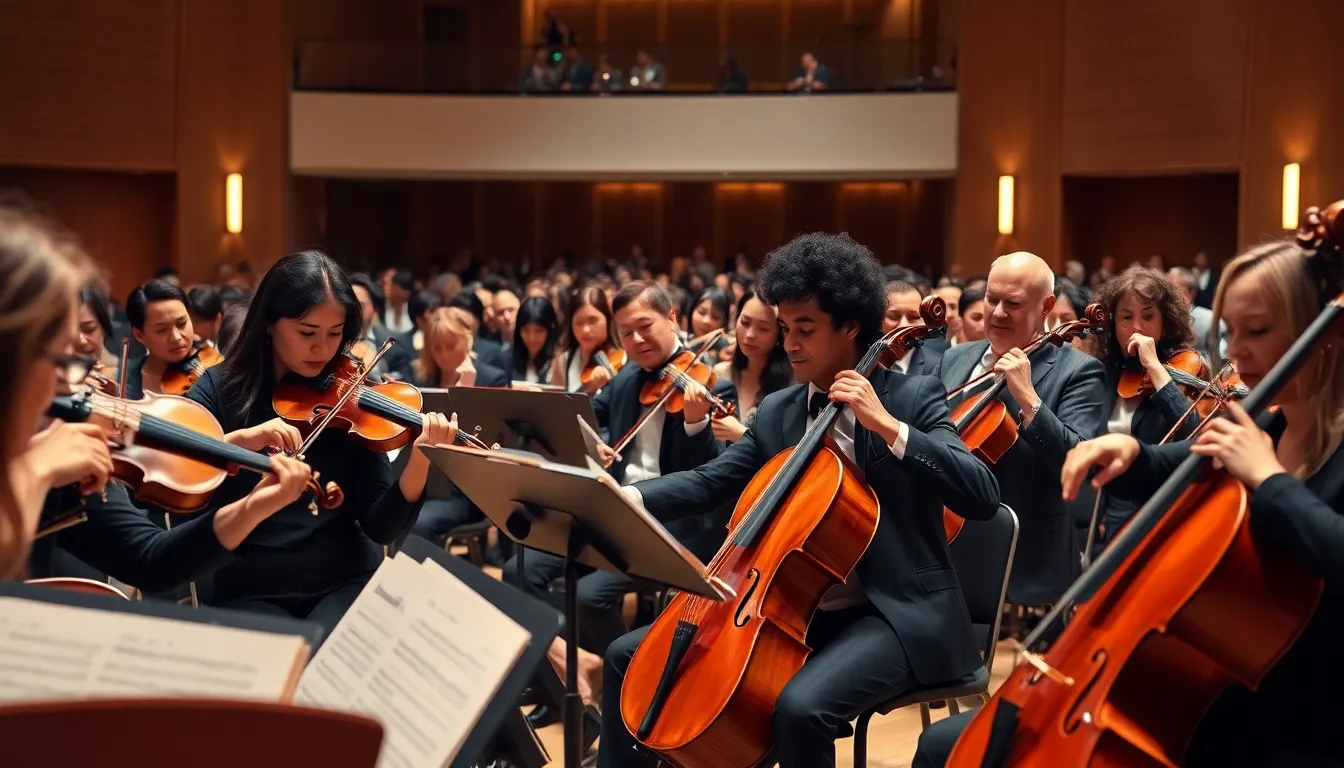
The Baroque era is often characterized by its elaborate musical ornamentation and expressive melodies. Composers of the time introduced complex polyphony, where multiple independent melodies intertwine. Coupled with a strong emphasis on contrast, listeners would often hear dynamic shifts between loud and soft passages. This technique created an emotional depth, connecting the audience to the music like never before.
Influential Composers of the Baroque Period
Several composers stand tall during this colorful period. Johann Sebastian Bach, known for his mastery of counterpoint, crafted works that remain foundational to Western music. Alongside him, George Frideric Handel became a household name with his operas and oratorios that captured the hearts of many. Antonio Vivaldi, with his dynamic concertos, particularly “The Four Seasons,” transformed the concerto grosso format into a vibrant showcase of emotion.
Significant Works from the Baroque Era
Noteworthy compositions from the Baroque era include Bach’s “Brandenburg Concertos,” a brilliant example of baroque orchestration and style. Handel’s “Messiah” is, of course, an undeniable masterpiece that continues to resonate, especially during the festive season. Vivaldi’s “The Four Seasons” also remains timeless, showcasing the interplay between music and the natural world.
The Classical Era (1750-1820)
Features of Classical Music
The Classical era marked a shift towards clarity and balance in musical composition. Here, symmetry takes center stage, with composers favoring structured forms like sonatas and symphonies. Unlike the intricate layering of Baroque, the music of this period emphasized harmony and melody over complexity, appealing to a wider audience.
Prominent Composers of the Classical Era
Key figures like Wolfgang Amadeus Mozart and Joseph Haydn showcase the brilliance of this era. Mozart, often dubbed the prodigy, composed numerous symphonies, operas, and chamber works, all marked by a unique melodic flair. Haydn, recognized as the “Father of the Symphony,” introduced elements that set the stage for future developments in orchestral music.
Notable Compositions from the Classical Period
Compositions such as Mozart’s “Eine kleine Nachtmusik” and Haydn’s “Symphony No. 94” from his “Surprise Symphony” illustrate the balance and beauty of the Classical era. This music invites listeners into a world of refined elegance and spirited joy.
The Romantic Era (1820-1900)
Distinctive Qualities of Romantic Music
Emotion takes the lead in the Romantic era, where composers draw deep feelings from the human experience. This period is characterized by expressive melodies, expanded forms, and a heightened focus on individualism. Compositions often connect directly to personal, political, or social themes, making the music feel deeply relatable.
Famous Composers of the Romantic Period
Famed composers like Frédéric Chopin, Johannes Brahms, and Pyotr Ilyich Tchaikovsky showcase the era’s emotional depth. Chopin’s piano works bring heartfelt emotion to the keys, while Brahms offers a rich harmonic palette. Tchaikovsky’s ballets, such as “Swan Lake” and “The Nutcracker,” combine narrative artistry with exquisite musicality.
Important Works of the Romantic Era
Prominent works from this era include Chopin’s “Nocturnes,” which evoke poignant emotions, and Tchaikovsky’s “1812 Overture,” famous for its powerful orchestration and dramatic flair. Brahms’ “Symphony No. 1” embodies the grand aspirations of Romanticism, wrapping listeners in layers of emotional expression.
The 20th Century and Beyond (1900-Present)
Evolution of Classical Music in the 20th Century
As the world changed, so did classical music. The 20th century welcomed various movements, from impressionism to minimalism, embracing innovation and modern concepts. Composers began exploring dissonance and incorporating different instruments, bringing a fresh sound to the classical tradition.
Key Figures of Modern Classical Music
Key figures such as Igor Stravinsky, Arnold Schoenberg, and Leonard Bernstein transformed the landscape. Stravinsky’s “The Rite of Spring” shocked audiences with its rhythmic complexity, while Schoenberg introduced twelve-tone technique, challenging conventional harmony. Bernstein’s works, combining elements of jazz and classical music, continues to bridge traditional and modern styles.
Influential Compositions from the 20th Century and Beyond
Notable pieces include Stravinsky’s “The Firebird,” showcasing rhythmic innovation, as well as Schoenberg’s “Pierrot Lunaire,” which redefined melodrama in music. Modern-day composers like Philip Glass and John Adams continue to evolve classical music, blending genres and influences.


