
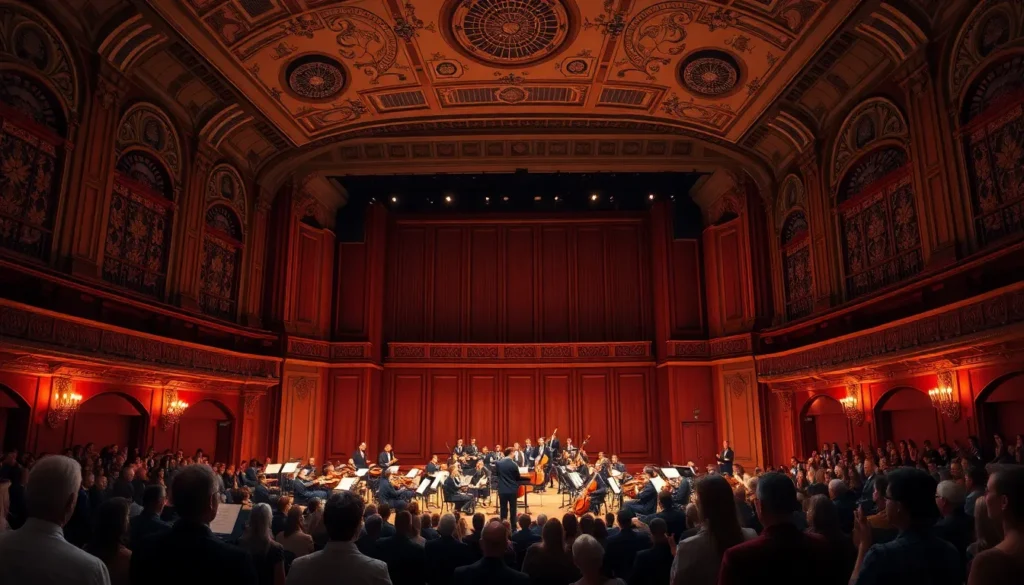
Classical music isn’t just for stuffy concert halls and pretentious critics; it’s a vibrant tapestry woven through centuries of creativity and innovation. From the dramatic symphonies of Beethoven to the delicate sonatas of Mozart, this genre has a rich history that’s as entertaining as it is educational. It’s time to dust off those old records and dive into a world where composers were rock stars of their day, often facing more drama than any reality TV show.
Imagine a time when musicians were the influencers of society, shaping culture and sparking revolutions with their compositions. Whether you’re a seasoned concert-goer or someone who thinks “Bach” is just a funny-sounding word, understanding classical music history opens up a new appreciation for the melodies that have stood the test of time. Get ready to explore the legacies of legendary composers and discover why their music still resonates today.
Overview of Classical Music History
Classical music history spans several centuries, marked by distinct periods that shaped its evolution. The Medieval period, from around 500 to 1400, laid the groundwork with Gregorian chants and the use of plainchant. Notably, composers like Hildegard von Bingen made significant contributions, enriching the vocal landscape.
The Renaissance period, spanning from 1400 to 1600, introduced polyphony, where multiple melodies interwove. Composers like Palestrina and Josquin des Prez excelled in this style, elevating sacred music’s complexity and emotional depth. Instrumental music gained popularity during this time, as courts began to favor elaborate compositions.
From 1600 to 1750, the Baroque period marked a dramatic shift with the emergence of opera and oratorio. Johann Sebastian Bach and George Frideric Handel showcased intricate counterpoint and expressive melodies, redefining the musical narrative. The use of ornamentation and vivid harmonic language became hallmarks of this era.
The Classical period, from 1750 to 1820, emphasized clarity and balance. Composers such as Mozart and Haydn introduced sonata form, refining structures that enhanced musical storytelling. Symphonies and string quartets became central to the repertoire, reflecting societal changes and enlightenment ideals.
Romantic music, spanning from 1820 to 1900, shifted focus toward emotion and personal expression. Musicians like Beethoven and Chopin explored new musical forms and techniques, pushing boundaries of the art. The era embraced nationalism, as composers drew inspiration from their cultural heritage.
The 20th century saw a diversification of styles, showcasing the rise of modernism. Genres like jazz and minimalism emerged, influenced by earlier classical traditions. Composers like Stravinsky and Philip Glass pioneered innovative approaches, captivating audiences with fresh sounds and concepts.
Understanding classical music history reveals its rich tapestry woven by legendary composers and transformative movements. This journey from early chants to contemporary expressions showcases the art form’s continuous evolution and lasting impact on culture.
The Origins of Classical Music
The origins of classical music trace back centuries. Various influences contributed to its formation, shaping the landscape of this timeless genre.
Early Influences
Ancient civilizations laid foundational elements for classical music. Greece contributed philosophical concepts about music’s role in education and emotional expression. Roman culture furthered music’s development through structured instruments and performances. The Christian Church played a significant role, promoting Gregorian chants in religious settings. These chants established monophonic textures, emphasizing the spiritual experience. Other early traditions, such as folk music, enriched the musical vocabulary by introducing diverse melodic patterns and rhythms. Each influence interwove, creating a rich tapestry that evolved into what we now recognize as classical music.
Key Composers from the Baroque Period
The Baroque period brought significant composers who shaped classical music’s direction. Johann Sebastian Bach emerged as a master of counterpoint, blending complex melodies within his works. George Frideric Handel gained fame for his operas and oratorios, captivating audiences with dramatic storytelling. Antonio Vivaldi made his mark with vibrant concertos, especially his iconic “The Four Seasons.” These composers highlighted contrasts between formal structure and expressive emotion. Each contributed to the evolution of music, enriching the repertoire with innovations in instrumentation and form. Their legacies endure, influencing countless musicians and composers across generations.
The Development of Classical Music
Classical music has evolved significantly over the centuries, reflecting cultural shifts and innovations. Each era introduced distinct characteristics that shaped its trajectory.
The Classical Era
The Classical Era, spanning from 1750 to 1820, emphasized balance and clarity. Composers such as Wolfgang Amadeus Mozart and Joseph Haydn played pivotal roles in refining musical structures. Symphony, sonata, and string quartet became popular forms, showcasing composers’ abilities to create coherent melodies. Mozart’s symphonies, noted for their elegance, enhanced the appeal of orchestral music. Haydn, known as the “father of the symphony,” contributed extensively to developing this genre, incorporating humor and surprise. This period marked a shift towards greater accessibility, with music appealing to a broader audience.
The Romantic Period
The Romantic Period, lasting from 1820 to 1900, focused on emotional expression and individualism. Composers like Ludwig van Beethoven and Franz Schubert explored deeper feelings through their works. Beethoven’s innovative approach expanded the scope of symphonic writing, emphasizing personal storytelling. Schubert introduced lyrical melodies that conveyed profound emotion, appealing to listeners on a personal level. The Romantic Era also saw the rise of nationalism, with many composers drawing inspiration from their cultural heritage. Innovations in harmony and orchestration led to richer textures and ambitious forms, solidifying the legacy of this vibrant time in music history.
Major Movements in Classical Music History
Classical music history features distinct movements that significantly influenced its development. Each era reflects unique styles and innovations that resonate through time.
Neoclassicism
Neoclassicism emerged in the early 20th century, aiming to revive the balance and clarity of earlier Classical forms. Composers embraced elements of the past while integrating modern nuances. Igor Stravinsky and Sergei Prokofiev exemplified this movement by blending traditional structures with contemporary harmonies. Their works often featured clear lines and structured forms, providing a contrast to the complexity of Romantic music. The return to classical ideals showcased a renewed appreciation for harmony, formality, and simplicity, impacting numerous composers and evolving musical language.
Modernism
Modernism arose in the late 19th and early 20th centuries, breaking free from traditional norms. This movement prioritized innovation and experimentation, reflecting a rapidly changing society influenced by technology and the world wars. Composers like Arnold Schoenberg and Claude Debussy challenged established conventions by exploring atonality and unique soundscapes. Their avant-garde approaches pushed boundaries, introducing new techniques such as twelve-tone compositions and extended instrumentation. Modernism’s impact reshaped musicians’ perceptions of melody, rhythm, and harmony, paving the way for diverse subsequent musical styles.
Influence of Classical Music on Contemporary Genres
Contemporary genres show a deep influence from classical music, significantly shaping various aspects of popular culture. Rock music often incorporates orchestral arrangements, reflecting its roots in classical traditions. Artists such as Led Zeppelin and The Beatles used string sections, enhancing their sound with sophisticated layers.
Hip-hop also draws inspiration from classical themes. Many producers sample classical pieces, weaving intricate melodies into their beats. Notable tracks like Eminem’s “Lose Yourself” feature samples that echo classical motifs, demonstrating a blend of genres.
Jazz incorporates classical elements through complex harmonies and improvisation. Musicians like Duke Ellington and George Gershwin fused classical techniques with jazz, creating unique music that resonates across genres. Their works exemplify the fluidity between classical and contemporary styles.
Electronic music frequently embraces classical instrumentation. Artists such as Max Richter compose modern soundscapes utilizing strings and piano, bridging the gap between classical music and ambient genres. This integration creates immersive experiences for listeners.
Film scores stand as a prominent example of classical music’s lasting impact. Composers like John Williams and Hans Zimmer blend orchestral sounds with contemporary elements, creating iconic soundtracks that enhance storytelling. The emotional weight of classical music enriches the cinematic experience.
Overall, classical music’s influence permeates many contemporary genres. From rock to hip-hop, artists continually draw from earlier works, demonstrating the timelessness and relevance of classical music in today’s music landscape.
Classical music’s journey through time reveals a dynamic interplay of creativity and cultural influence. Its evolution from the Gregorian chants of the Medieval period to the innovative sounds of Modernism showcases the genre’s adaptability and relevance. Each composer brought unique perspectives that not only enriched the music itself but also shaped societal norms and artistic expression.
Today, classical music continues to inspire a wide array of genres, proving its timeless appeal. By exploring its rich history, listeners can foster a deeper appreciation for the melodies that have stood the test of time and the legacies that continue to resonate in contemporary music.


