

In a world where everyone claims to be a karaoke superstar, music education classes stand out as the real deal. They’re not just about hitting the right notes; they’re about unlocking creativity, building confidence, and maybe even discovering the next big talent. Imagine strumming a guitar or belting out a tune, all while learning the theory behind the magic. It’s like turning your shower into a stage, minus the slippery tiles.
Overview of Music Ed Classes
Music education classes provide essential skills and experiences that extend beyond the basics of playing instruments or singing. Such classes contribute significantly to personal and academic development, engaging students in diverse musical practices.
Definition and Purpose
Music education classes encompass a range of activities, including learning instruments, music theory, and vocal training. Goals include fostering musical skills, enhancing creativity, and nurturing self-expression. These classes target various age groups and skill levels, making music accessible to all. Ultimately, they aim to develop well-rounded musicians who gain confidence and a deeper appreciation for music.
Importance in Education
Music education plays a vital role in holistic learning environments. Studies show students involved in music education perform better academically, exhibit higher levels of motivation, and improve social skills. These classes cultivate discipline, teamwork, and persistence in students. Furthermore, music education nurtures cognitive abilities, influencing skills such as problem-solving and critical thinking. Emphasizing creativity, music classes stimulate intellectual growth, allowing students to excel in multiple disciplines.
Types of Music Ed Classes
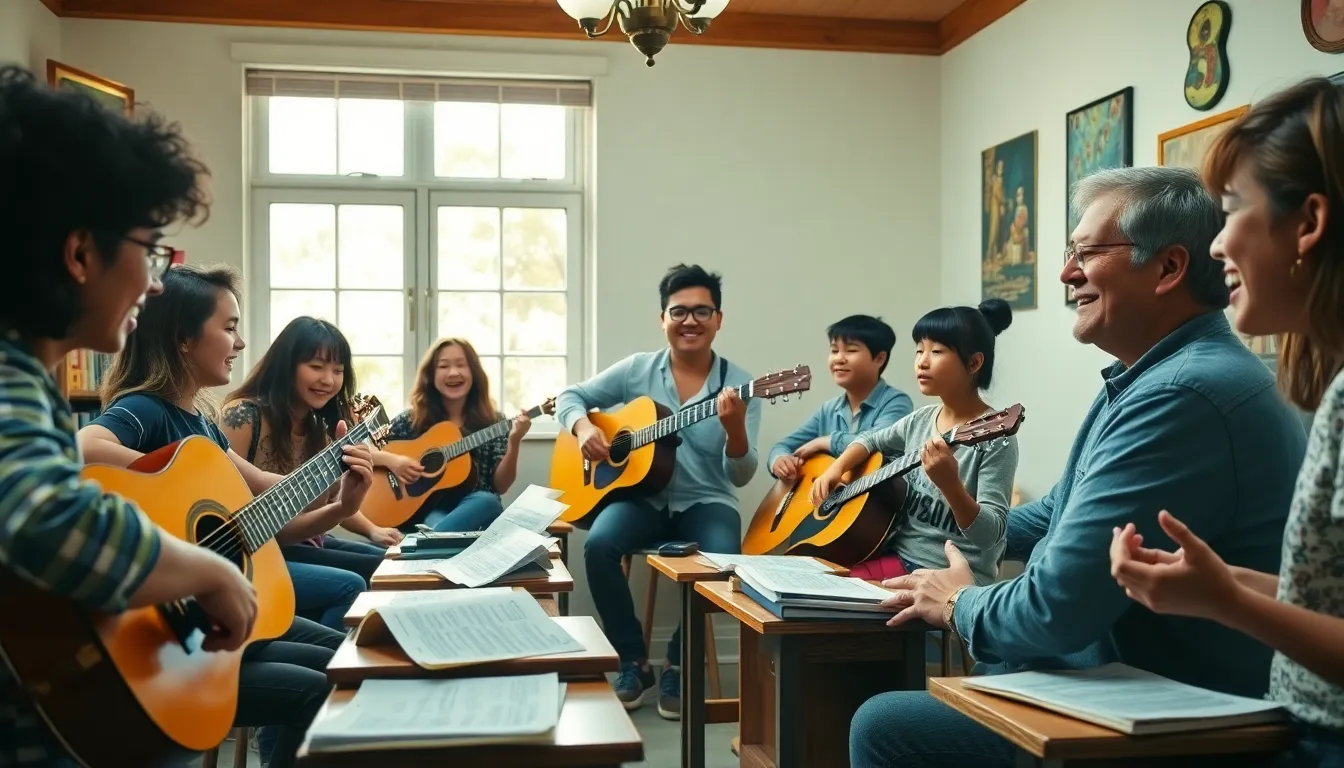
Music education classes encompass diverse formats that cater to different learning styles and preferences.
Traditional Music Classes
Traditional music classes provide structured environments for learning instruments and vocal techniques. Students participate in group lessons, solo performances, and ensemble rehearsals, allowing them to collaborate and share experiences. These classes often focus on music theory, developing foundational skills crucial for musicians. Teachers guide students through a curriculum that may include genres like classical, jazz, and contemporary music. Numerous schools and community programs offer these classes to various age groups, ensuring that everyone can access music education. The in-person interaction fosters a sense of community, enhancing motivation and engagement among participants.
Online Music Learning
Online music learning offers flexibility and accessibility for students. Individuals often access lessons via video tutorials, live streaming sessions, or interactive platforms. These digital formats enable personalized pacing, accommodating different skill levels from beginner to advanced. Participants can choose from various genres and instruments, reflecting their specific interests. Many online programs include resources like sheet music and practice tools, promoting self-directed learning. Students engage with instructors from around the world, broadening their exposure to diverse musical styles and techniques. Online music learning represents a growing trend, making it easier for individuals to pursue their passion for music anytime, anywhere.
Benefits of Music Ed Classes
Music education classes provide numerous advantages that support personal and academic growth.
Cognitive Development
Cognitive skills improve significantly through music education. Learning instruments enhances memory and attention span, enabling students to process information more efficiently. Exposure to music theory develops critical thinking, as students analyze patterns and structures in compositions. Moreover, rhythm exercises boost mathematical understanding by reinforcing counting and timing. Music lessons also stimulate brain activity, which can result in increased creativity. Research indicates that students engaged in music education often perform better in standardized tests.
Social Skills Enhancement
Social interaction thrives in music classes, where collaboration is essential. Group rehearsals and ensemble performances foster teamwork, requiring students to communicate and synchronize efforts. Collaborating with peers in music promotes listening skills and respect for others’ contributions. Additionally, participation in performances builds confidence, helping students feel comfortable sharing their talents. Music education cultivates a sense of belonging, uniting individuals with shared interests. Studies reveal that students involved in music initiatives often develop stronger relationships and improved social networks.
Challenges in Music Ed Classes
Music education classes face significant challenges that can hinder their effectiveness and reach. These obstacles include issues related to funding, resources, and overall accessibility.
Funding and Resources
Funding constraints pose a major challenge for music education programs. Budget cuts often lead to fewer instruments and materials available for students. Schools with limited financial resources struggle to provide not only instruments but also qualified instructors. Many programs rely on donations and grants, which can fluctuate from year to year. Public funding for arts education remains inconsistent, impacting the sustainability of music classes. Schools unable to secure adequate funding often limit curriculum offerings, compromising students’ experiences.
Accessibility and Inclusivity
Accessibility presents another substantial barrier in music education. Some communities lack the necessary infrastructure for engaging music programs. Underrepresented groups might not have the same opportunities to participate in music education classes. Inclusivity also remains a concern as programs must cater to diverse skill levels and backgrounds. Adapting curriculum and instruction methods can help address these challenges, ensuring that all students, regardless of ability, can enjoy and benefit from music education. Prioritizing equity in music education can foster an environment where every child feels valued and included.
Music education classes play a crucial role in shaping well-rounded individuals. They not only enhance musical skills but also foster essential life skills that extend beyond the classroom. The joy of creating and performing music contributes to a richer educational experience and personal growth.
As challenges persist in funding and accessibility, the importance of advocating for inclusive music programs remains vital. By ensuring that all students have the opportunity to engage in music education, communities can cultivate a generation of creative thinkers and confident leaders. Investing in these programs ultimately enriches society as a whole, reinforcing the transformative power of music in education.


