
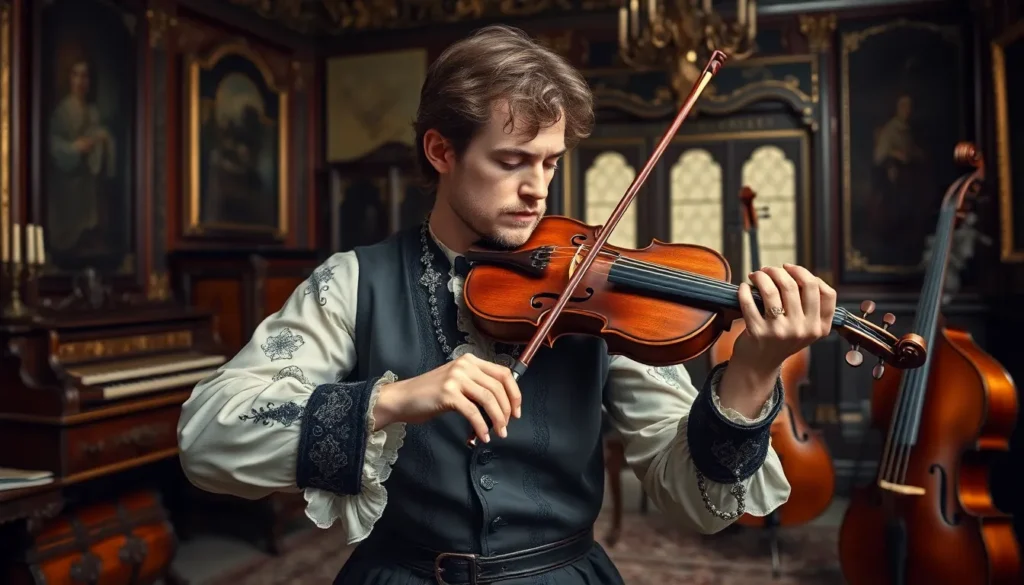
Step into the extravagant world of Baroque music, where instruments weren’t just tools—they were the stars of the show. Imagine a time when musicians strutted their stuff with violins that sang like angels and harpsichords that could make even the grumpiest of nobles tap their toes. Baroque instruments are a delightful blend of craftsmanship and creativity, each with its own unique personality and flair.
Overview of Baroque Instruments
Baroque instruments played a pivotal role in shaping the music of the 17th and 18th centuries. The era embraced a diverse range of instruments, each contributing unique sounds and textures. The violin emerged as a primary solo instrument, celebrated for its expressive qualities and dynamic range. Likewise, the violoncello provided a rich, warm foundation within ensembles, supporting harmonies and melodic lines.
Harpsichords dominated keyboard performance during this time, offering a delicate, yet assertive sound. Their plucked strings allowed for intricate embellishments, making them essential in both solo and ensemble settings. Organs also held an important place, frequently found in churches, supplying majestic and grand tones suitable for liturgical settings.
Woodwind instruments such as the traverso (a type of flute) and the oboe gained popularity, adding lightness and clarity to compositions. The traverso’s soft, airy notes complemented the violin’s vibrancy while the oboe’s penetrating sound provided a contrasting timbre. Brass instruments like the trumpet and horn were utilized to convey power and excitement, often heard in ceremonial contexts.
Additionally, the lute gained favor as a versatile instrument, accompanying vocal music and providing harmonic support in chamber ensembles. Its delicate sound offered a personal touch to intimate settings.
Instrument makers focused on craftsmanship during the Baroque period, enhancing the capabilities and sonorities of their creations. Innovations in design allowed for greater expressiveness, inspiring musicians to explore the full potential of their instruments. This commitment led to a diverse array of instruments, each contributing to the rich tapestry of Baroque music.
Key Characteristics of Baroque Instruments
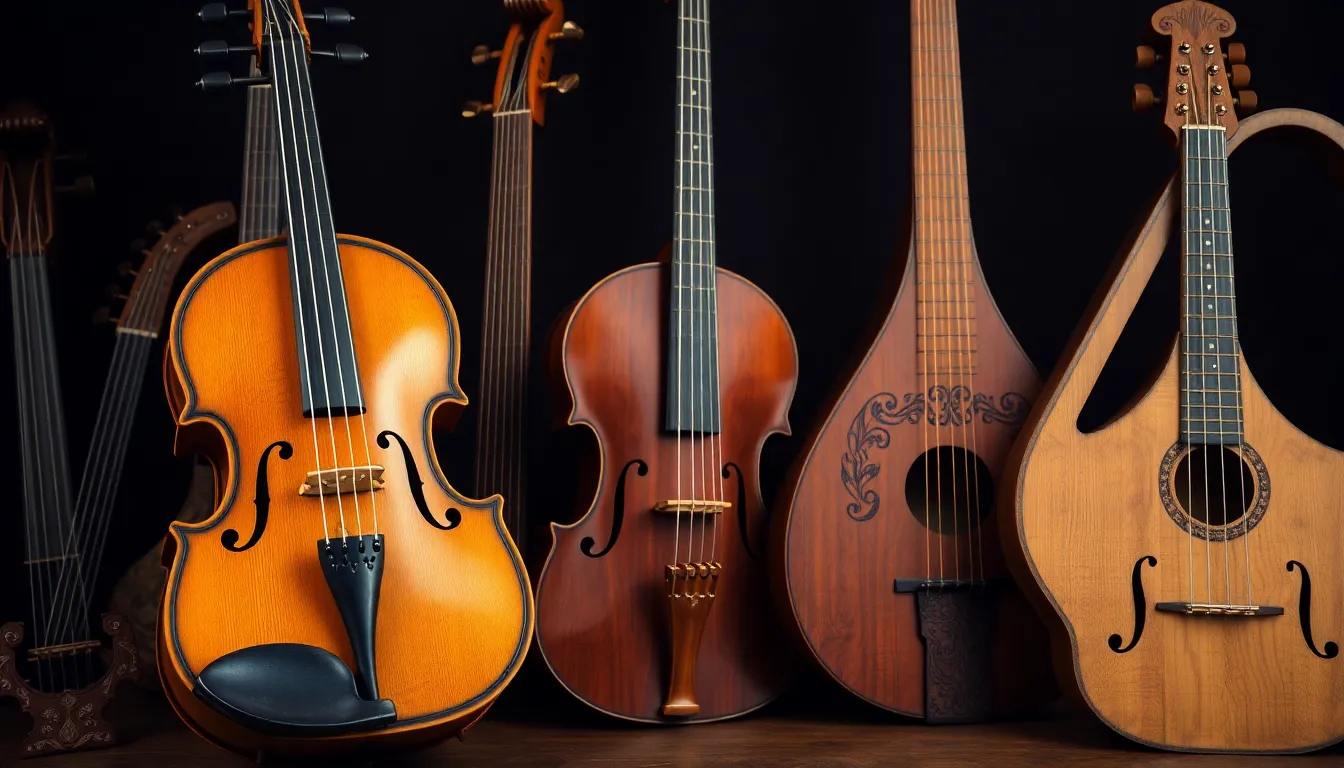
Baroque instruments are distinguished by their unique materials, craftsmanship, and design features. These aspects significantly influenced the music during the 17th and 18th centuries.
Material and Craftsmanship
Wood is the primary material used in Baroque instruments, with choices like spruce for tops and maple for backs. Such selections contribute to sound quality and resonance. Artisans focused on meticulous craftsmanship, often handcrafting each piece, which ensured individuality in tone and playability. Specific processes like careful carving and the use of animal glues imparted durability. The attention to detail is visible in instruments such as violins and lutes, where craftsmanship directly affects the performance. String tension and placement also play crucial roles in sound production, setting Baroque instruments apart from their contemporaries.
Design Features
Baroque instruments exhibit distinctive design elements that enhance their musical capabilities. Curved shapes and intricate decorations provide both aesthetic appeal and functional benefits. The body shape of violins allows for richer resonance while maintaining projection. Furthermore, the fingerboards on lutes and violins feature varied styles, impacting playability and articulation. Harpsichords possess unique construction methods, including plucking mechanisms that define their sound. The lack of a universal standard in design means each instrument can showcase individual artistic expression. These thoughtful designs facilitate a wide range of expressive possibilities, greatly enriching Baroque music.
Popular Baroque Instruments
Baroque music featured distinct instruments that shaped its sound. Each instrument brought unique qualities, contributing to the vibrant musical landscape of the period.
The Harpsichord
The harpsichord stood out as a key keyboard instrument during the Baroque era. Its plucked strings produced a bright, resonant tone that enhanced ensemble performances. Artisans crafted harpsichords using high-quality woods, resulting in varied timbres. Musicians praised its ability to execute intricate fingerwork, making it essential for both solo and orchestral settings. Its versatility allowed composers to experiment with different musical styles and forms, solidifying the harpsichord’s enduring popularity.
The Viola da Gamba
The viola da gamba offered a rich, warm sound that enriched Baroque ensembles. Played between the knees, its fretted neck provided unique playing techniques not found in other string instruments. This instrument featured six to seven strings, allowing for smooth melodic lines and chords. Artisans carefully constructed violas da gamba from fine woods, ensuring optimal resonance. Musicians often employed it in both chamber music and orchestral settings, showcasing its expressive capabilities.
The Lute
The lute gained fame for its versatility in Baroque music. Its soft, gentle tones complemented vocal performances and provided harmonic support. With its pear-shaped body and several strings, the lute supported intricate fingerpicking techniques. Artisans designed lutes with special attention to craftsmanship, leading to stunning variations in form and decoration. Musicians frequently used lutes for solo pieces and as an accompaniment, making it a cherished instrument for both composers and performers.
The Role of Baroque Instruments in Music
Baroque instruments played a crucial role in the development of music during the 17th and 18th centuries. Their distinct sounds shaped compositions and performance practices.
Influence on Composition
Composers utilized Baroque instruments to explore new musical ideas. The expressive qualities of the violin inspired intricate melodies, while the rich tones of the violoncello provided a harmonic backbone. Harpsichords featured prominently, offering a textural variety that allowed composers to experiment with dynamics and contrapuntal techniques. Woodwinds such as the traverso and oboe contributed clarity, resulting in intricate melodic lines. As composers sought to highlight the abilities of these instruments, they created distinctive styles that defined the Baroque repertoire.
Performance Practices
Performance practices evolved alongside Baroque instruments, promoting expressive interpretations. Musicians embraced ornamentation, including trills and runs, to enhance musical phrases. Historically informed performances typically featured a smaller ensemble for intimate settings, allowing for greater communication among musicians. Improvisation became common, reflecting performers’ skills and personal styles. Use of vibrato and phrasing varied significantly, infusing interpretations with emotion. Overall, the interplay between instrument capabilities and performance practices fostered a dynamic musical environment.
Notable Baroque Instrument Makers
Several renowned makers contributed to the development of Baroque instruments, each known for exceptional craftsmanship. Andrea Amati, active in the 16th century, set standards for the violin family through innovative designs and superior wood selection. His work laid the groundwork for future artisans and inspired generations of musicians.
Stradivari, often considered the pinnacle of violin making, revolutionized instrument construction with his meticulous attention to detail. He crafted violins that boasted unparalleled tonal qualities and intricate aesthetic features. Renowned soloists prize Strad violins for their remarkable sound, which reflects the peak of Baroque violin-making artistry.
The Guarneri family also played a significant role in shaping string instruments during this era. Their violins, particularly those made by Giuseppe Guarneri, are celebrated for their powerful and rich tones. Musicians frequently seek these instruments for their unique character and projection in performance.
In the realm of keyboard instruments, the harpsichord gained prominence through makers like Hans J. H. Schmidt and Andrea Zenti. Schmidt’s designs emphasized a balance between craftsmanship and musicality, while Zenti’s innovative approaches pushed the bounds of harpsichord construction, enhancing resonance and tonal clarity.
Lastly, the lute flourished under the hands of makers such as Hans Frei and Jacobus Stainer. Frei’s lutes were known for their elegant forms and vibrant sound, enabling expressive performances. Stainer’s instruments, embedded in rich tradition, blended artistry with playability.
Instrument makers of the Baroque period shared a commitment to excellence, deeply influencing the musical landscape. Their dedication to quality contributed to the enduring legacy of Baroque music, allowing musicians to explore emotional depth and creativity through their art.
Baroque instruments played a vital role in shaping the rich musical landscape of the 17th and 18th centuries. Their unique craftsmanship and design enhanced the expressive capabilities of musicians, allowing for a diverse range of sounds and styles. From the vibrant tones of the violin to the intricate melodies of the lute, each instrument contributed to the era’s dynamic performances.
The legacy of Baroque instruments continues to influence modern music, reminding us of the artistry and innovation that defined this period. As musicians explore these historic instruments today, they not only connect with the past but also inspire new interpretations and creative expressions. The enchanting sounds of Baroque music live on, thanks to the dedication of both instrument makers and performers.


