

Imagine a world where music tells stories without a single word. That’s the magic of program music, a genre that paints vivid pictures and evokes emotions through sound alone. From the stirring tales of nature to dramatic narratives of love and loss, program music has captivated audiences for centuries.
Overview of Program Music
Program music serves as a unique genre within classical music, focusing on instrumental compositions that tell a story or convey a specific theme. Unlike traditional music that relies heavily on lyrics, program music utilizes melody, harmony, and rhythm to paint vivid pictures. Various composers exemplify this approach, exploring themes from nature to personal experiences.
In the Romantic era, program music flourished, with artists like Hector Berlioz and Franz Liszt pushing the boundaries of musical storytelling. Their works, such as Berlioz’s “Symphonie Fantastique” and Liszt’s “Les Préludes,” exemplify the powerful narratives achievable through sound. Both pieces express deep emotions and illustrate a series of events, drawing listeners into their imaginative landscapes.
Composers often employ specific techniques to enhance the storytelling aspect. They might use motifs to represent characters or ideas, crafting a musical language that communicates without words. This method allows for a rich sensory experience, as listeners visualize scenes and emotions through sound alone.
Program music continues to resonate with audiences today, captivating listeners with its ability to evoke imagery and feelings. By transcending language, it offers a universal connection, inviting interpretation based on individual experiences. Each performance may vary, reflecting the unique insights of both the musician and the audience, further enriching the art form.
Overall, the legacy of program music emphasizes its cultural importance and artistic innovation, maintaining its relevance in contemporary music.
Origins of Program Music
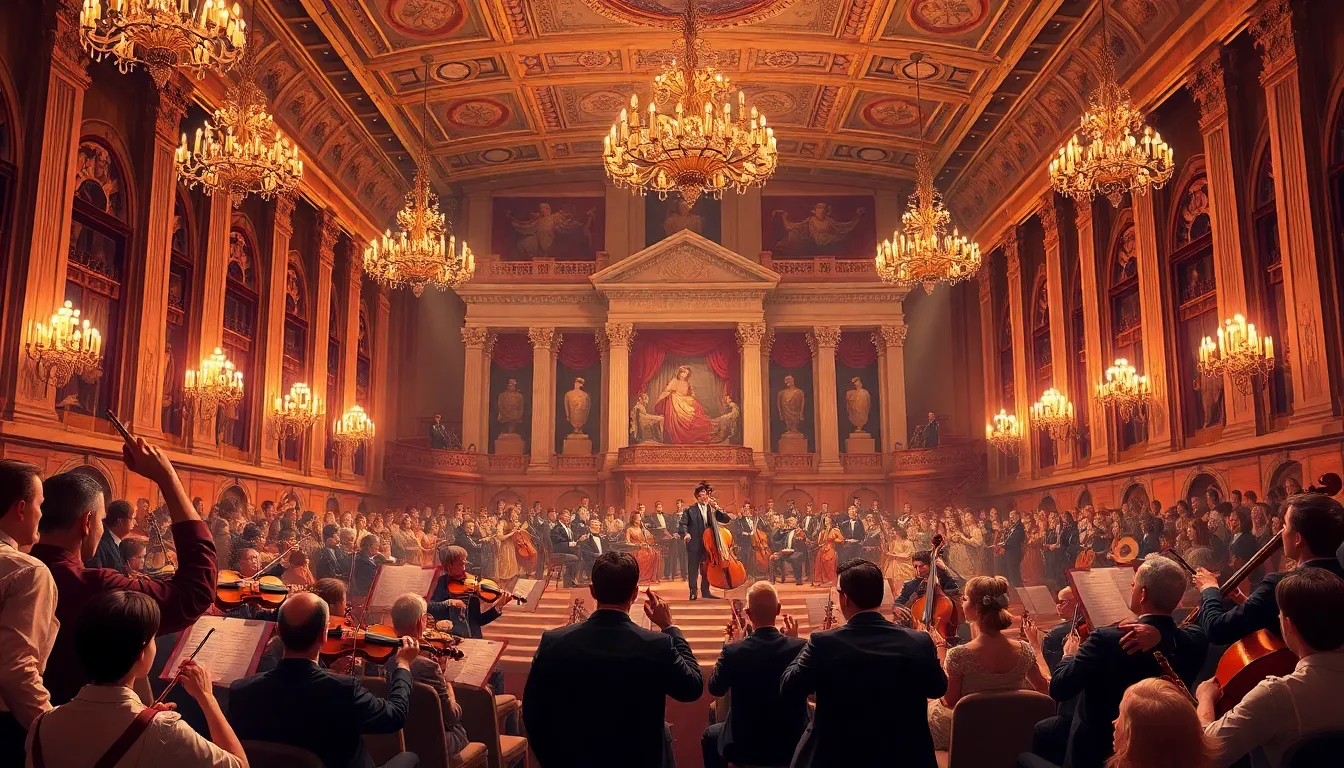
Program music traces its roots to influential periods in music history, with early expressions appearing as far back as the Baroque era.
Early Examples in the Baroque Era
Composers like Johann Sebastian Bach and Antonio Vivaldi laid foundational ideas for program music. Bach’s “Brandenburg Concertos” included descriptive elements that suggested scenes and emotions, while Vivaldi’s “The Four Seasons” explicitly depicts nature through sound. These works utilized melodies that mirrored specific imagery and feelings, allowing listeners to engage deeply. Descriptive titles complemented the music, guiding audience interpretation. Such early innovations demonstrated music’s power to evoke visual storytelling, setting the stage for future developments in programmatic compositions.
The Classical Period’s Influence
Transitioning into the Classical period, composers like Joseph Haydn and Wolfgang Amadeus Mozart refined the concept further. Haydn’s “The Creation” offered a narrative framework that celebrated the beauty of creation through vibrant orchestration. Mozart’s “Symphony No. 41,” known as “Jupiter,” incorporated thematic development that suggested dramatic storytelling. Melodic motifs represented characters and ideas, creating a dialogue within the composition. This emphasis on music as an expressive narrative form established a strong link between sound and story, effectively paving the way for the Romantic era’s explosion of program music.
Development Through Romanticism
The Romantic era marked a significant advancement in program music, emphasizing expressive storytelling through sound. Composers sought to create deep emotional responses by translating literary and artistic themes into musical compositions.
Notable Composers and Their Works
Hector Berlioz emerged as a leading figure in program music with his “Symphonie Fantastique,” which narrates a tumultuous love story through distinct movements. Franz Liszt also contributed significantly, particularly with “Les Préludes,” where musical themes evolve, reflecting the cycle of life. Richard Strauss introduced vivid orchestral imagery in “Also sprach Zarathustra,” further enhancing program music’s narrative potential. These composers expanded the boundaries of music, allowing listeners to experience profound emotional journeys and intricate stories.
The Role of Literature and Art
Literature and art played crucial roles in shaping program music during the Romantic period. Many composers drew inspiration from literary works, infusing their music with narratives from poems and novels. The vivid imagery in these stories enhanced musical performances, allowing audiences to connect deeply with the emotions portrayed. Paintings and visual arts influenced composers too, as they sought to evoke similar feelings through sound. This interplay between different artistic forms enriched program music, creating a diverse and dynamic landscape that captivated listeners.
The 20th Century and Beyond
Program music evolved significantly during the 20th century, introducing new techniques and styles that enhanced its narrative capacity.
Innovations in Program Music
Composers embraced modernism, seeking to expand the boundaries of musical storytelling. A shift toward atonality and dissonance emerged, allowing for a more nuanced portrayal of emotions. Techniques like musique concrète involved using recorded sounds from everyday life, offering fresh ways to convey narratives. Furthermore, electronic music introduced innovative textures and soundscapes, making the genre more versatile and accessible. Such adaptations enriched the expressive potential of program music, turning it into a vibrant form that continued to capture audiences’ imaginations.
Modern Composers Impacting the Genre
Contemporary composers contribute significantly to program music’s evolution. For instance, John Adams incorporates minimalism while exploring complex themes in works like “Nixon in China.” Similarly, Jennifer Higdon’s compositions often reflect vivid imagery, as seen in “blue cathedral,” which captures a poignant emotional journey. Other notable figures include Esa-Pekka Salonen and John Corigliano, who integrate modern techniques while honoring traditional storytelling methods. Each of these composers expands the genre’s scope, blending innovation with rich, narrative-driven compositions that resonate with today’s listeners.
Program music stands as a testament to the power of sound in storytelling. Its journey from the Baroque era to contemporary compositions showcases an impressive evolution that continues to inspire both composers and audiences alike. By transcending the limitations of lyrics, it creates a unique emotional landscape that invites personal interpretation.
As modern composers explore new techniques and styles, program music remains a dynamic force in the musical world. Its rich history and ongoing innovation affirm its significance and relevance, ensuring that it will captivate listeners for generations to come. Through every note and motif, program music continues to weave intricate narratives that resonate deeply within the human experience.


