

Franz Schubert, the musical genius who could turn a simple melody into a heart-wrenching ballad, has left a legacy that continues to enchant audiences today. With a knack for blending emotion and innovation, his compositions are like a fine wine—complex, rich, and best enjoyed with a side of deep contemplation. Whether you’re a seasoned classical aficionado or someone who just hums along to the tunes in the background, Schubert’s work has something for everyone.
Imagine a world where every note tells a story, where each composition is a journey through the highs and lows of human experience. That’s the magic of Schubert. From his mesmerizing lieder to symphonies that make you feel like you’re soaring through the clouds, his music invites listeners to dive into a sea of emotion. Get ready to explore the captivating world of Schubert’s compositions, where every piece is a delightful surprise waiting to be discovered.
Overview of Schubert Compositions
Franz Schubert’s compositions embody a fusion of lyrical beauty and emotional depth. His music consistently resonates with audiences, making it a subject of widespread admiration.
Historical Context
Schubert lived during the late Classical and early Romantic periods. This era was marked by profound changes in musical expression and artistic ideals. Composing between 1797 and 1828, Schubert faced both the challenges of his time and the rich traditions of earlier composers. Influenced by the likes of Beethoven and Mozart, he carved out a distinctive voice. His lieder, such as “Gretchen am Spinnrade” and “Die Forelle,” reflected contemporary themes and Romantic sensibilities, setting a foundation for future generations.
Significance in Classical Music
Schubert’s impact on classical music remains substantial. He expanded the boundaries of song, creating a new genre of art song through his lieder. Additionally, his symphonic works, including Symphony No. 8, also known as the “Unfinished,” exemplify innovative orchestration and structure. Influences on composers like Brahms and Mahler highlight his enduring legacy. His compositions often capture a wide range of emotions, engaging audiences both intellectually and emotionally. Schubert’s unique ability to blend melody and harmony paved the way for future developments in music.
Major Works
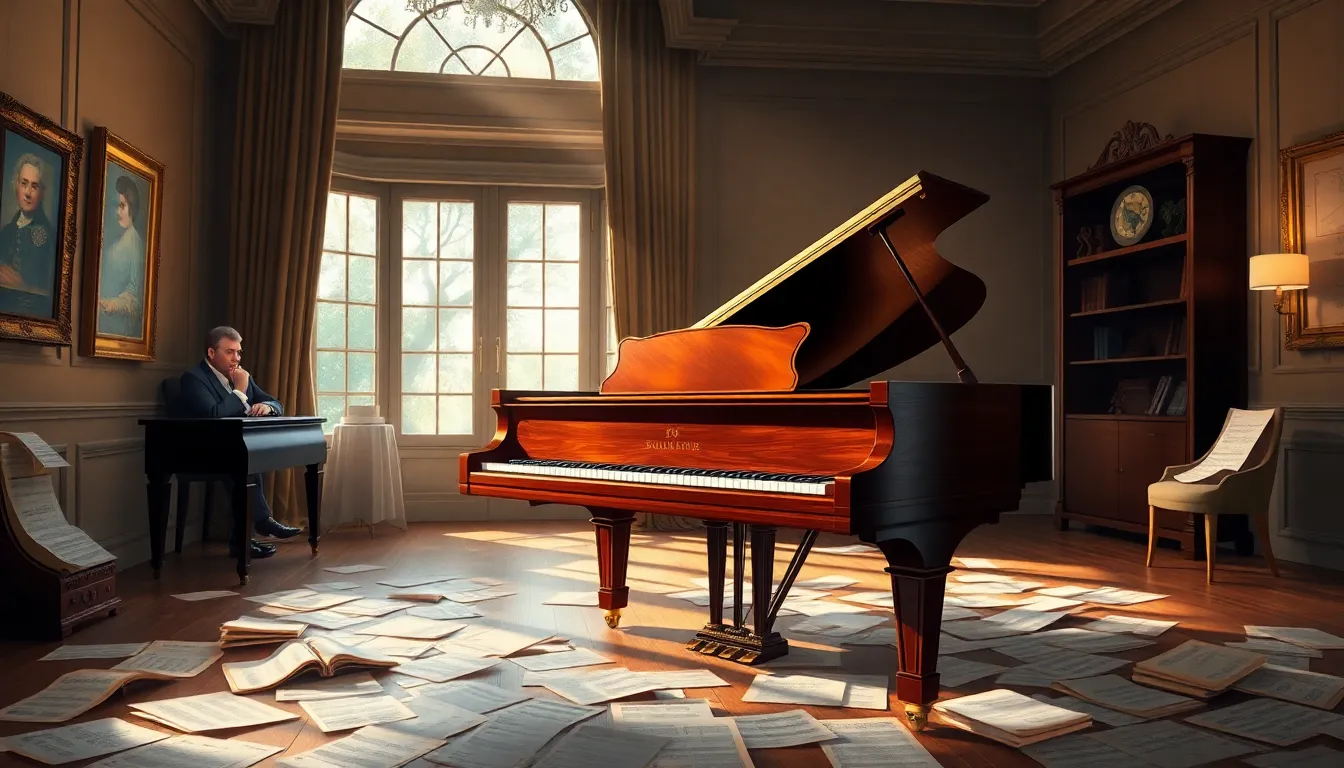
Franz Schubert’s compositions include significant contributions to the classical music repertoire, showcasing his lyrical style and emotional depth.
Piano Sonatas
Schubert composed 21 piano sonatas, with Sonata in B-flat major, D. 960 recognized as a masterpiece. This particular sonata features intricate melodies and rich harmonies. Several others, like Sonata in A major, D. 664, showcase his ability to blend classical forms with deep emotion. Each work reveals Schubert’s evolution as a composer, transitioning from classical influences to early romanticism. His piano sonatas remain essential studies for pianists, highlighting his unique voice within Western music.
Lieder (Songs)
Schubert’s lieder are among his most celebrated works, with over 600 songs in his catalog. The song cycle “Die schöne Müllerin” stands out for its exploration of love and loss. “Winterreise,” another cycle, delves into themes of longing and despair, establishing him as a pioneer of the art song genre. Notable individual pieces, such as “Gretchen am Spinnrade” and “Die Forelle,” masterfully blend poetic lyricism and expressive melodies. These songs resonate deeply, illustrating not only Schubert’s gifts as a melodist but also his profound understanding of human emotion.
Stylistic Characteristics
Franz Schubert’s compositions exhibit distinctive stylistic elements that set them apart in the classical music landscape. These characteristics highlight his innovative approach to melody and harmony.
Melodic Structure
Schubert’s melodies often stand out for their lyrical quality. They flow effortlessly, inviting listeners into a world of emotion. Characteristically, his melodies incorporate wide intervals, which enhance their expressiveness. Many pieces showcase frequent modulations, creating a sense of surprise and development. For example, “Gretchen am Spinnrade” perfectly illustrates this approach with its intertwining lyrical lines. Moreover, his use of repetition and variation reinforces emotional themes throughout his lieder and instrumental works. Each melodic line resonates, drawing on the nuances of human experience.
Harmonic Innovations
Harmonic sophistication emerges as a hallmark of Schubert’s style. He frequently employed unexpected chord progressions that elevate tension and resolve it impressively. Distinctive harmonic coloring enriches the emotional depth of his compositions. Notably, the seamless blending of diatonic and chromatic harmonies adds complexity to his music. The use of diminished seventh chords contributes to the sense of suspense and longing found in pieces like Symphony No. 8, the “Unfinished.” Furthermore, his innovative harmonic techniques paved the way for later composers, influencing the trajectory of Western art music. Schubert’s harmonic language carries profound significance, underscoring his genius.
Influence on Later Composers
Franz Schubert’s compositions significantly influenced future generations of musicians. Many composers drew inspiration from his melodic and harmonic innovations.
Romantic Era Impacts
Robert Schumann and Johannes Brahms both admired Schubert’s lyrical depth and ability to convey emotion. Schumann’s symphonic and vocal works echo Schubert’s seamless blend of melody and harmony. Brahms, in particular, embraced Schubert’s structure in art songs, channeling similar themes of love and longing in his own lieder. Gustav Mahler explored emotional landscapes in his symphonies, a testament to Schubert’s influence on his intricate orchestration and song-like melodies. These composers carried forward Schubert’s legacy, enriching the Romantic repertoire through their nuanced approaches.
Contemporary Resonances
Present-day composers continue to reference Schubert’s work, highlighting his enduring relevance. Art song composers like Benjamin Britten and Leonard Bernstein incorporate Schubertian elements in their own pieces. Influences can also be seen in film scores that evoke Schubert’s emotional storytelling. Contemporary classical musicians admire Schubert’s ability to communicate complex human experiences through simple yet profound musical ideas. His approach resonates with modern audiences, bridging historical and present musical contexts.
Franz Schubert’s compositions remain a testament to his extraordinary talent and emotional insight. His ability to weave intricate melodies with profound themes continues to resonate with listeners across generations. Each piece invites an exploration of human experiences that are both timeless and relatable.
Schubert’s innovative techniques and stylistic characteristics have not only shaped the art song genre but also influenced countless composers who followed him. His legacy lives on in the music world, reminding us of the power of melody and emotion. As audiences engage with his works, they discover the profound beauty and complexity that define Schubert’s contributions to classical music.